

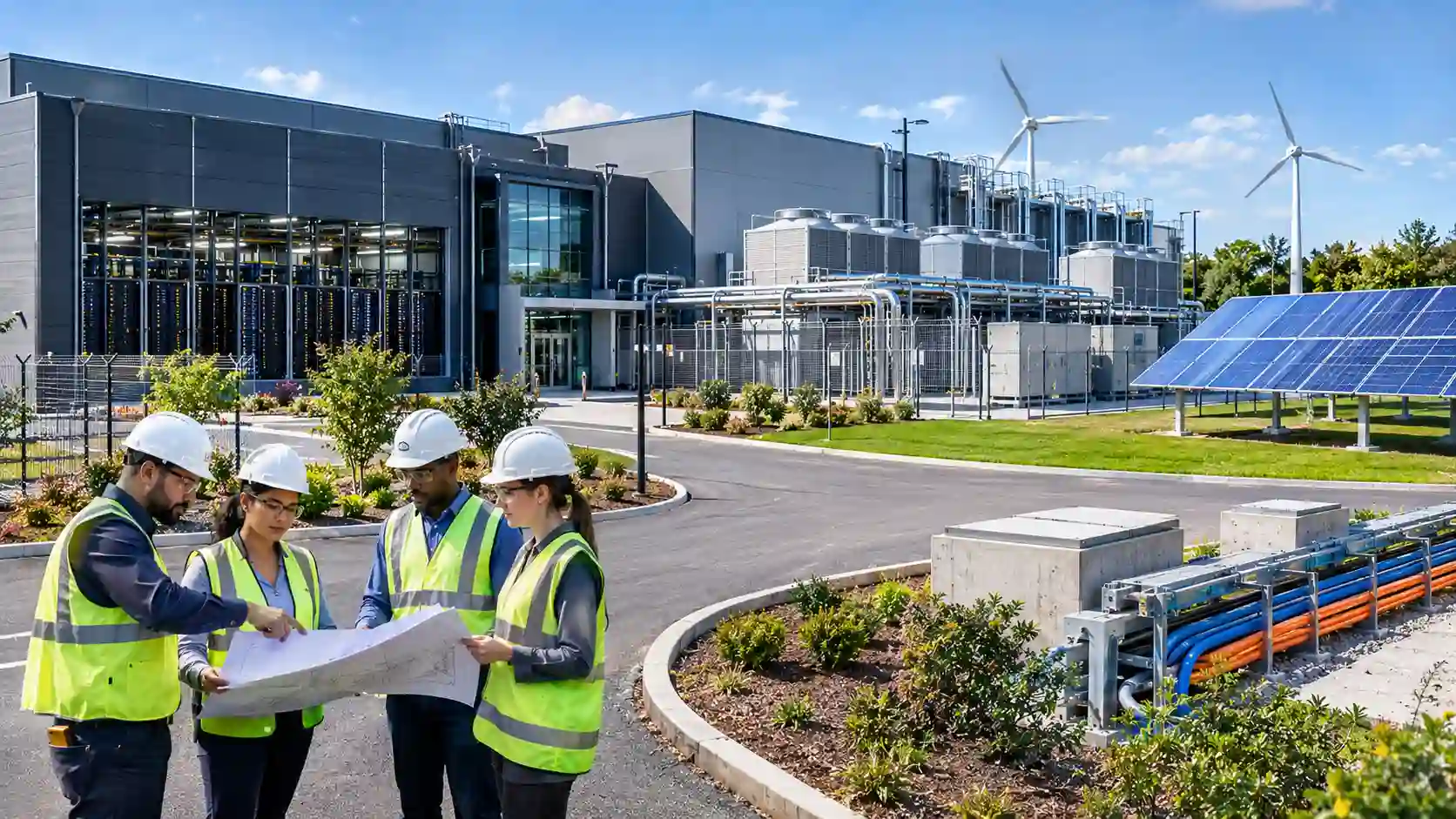



For a developer planning a data center for a tenant, power is only the first job on the list, even when renewable energy is part of the plan. The same site also needs cooling, fiber and network connections, supporting equipment, site work, and a building ready for the tenant. Each of these parts may raise a tax question of its own. This post looks at renewable energy for data centers and the tax considerations behind the whole site.
This post is for data center developers, property owners, infrastructure investors, and businesses that build renewable energy and supporting facilities. If you’re unfamiliar with some of the tax terms, don’t worry; we break it down for you. We cover three areas worth a review, not every rule. Not every data center generates its own power, and this post does not suggest it should.
How Does Data Center Power Fit Into a Powered Shell Arrangement?
A powered shell is a building or space delivered ready for a tenant, with power and network connections in place.
What Does a Powered Shell Look Like in Practice?
Data center projects handle these requirements in different ways, so who supplies what depends on the agreement. It also varies from project to project.
Here is a simple example. A developer buys land and prepares the site with renewable power, cooling, and network connectivity. The developer then builds a powered shell. The tenant moves in and sets up its computing equipment.
Some people call this “gray space as a service.” Gray space usually means the areas that house the power and cooling equipment that support the computing area. Think of the phrase as a plain label, since not every company uses it.
What Does the Developer Provide, and What Does the Tenant Bring?
Each side covers different parts of the site. In this example, the developer may provide:
- Renewable power equipment
- Cooling systems
- Fiber and network connectivity
- Supporting equipment
- Site preparation and land improvements
- The building or space prepared for the tenant
The tenant may bring:
- The computing equipment it installs
- Any other equipment the agreement assigns to it
Why Does the Developer and Tenant Split Matter for Tax?
The split matters because tax questions can follow ownership and purpose. An asset that the developer builds and keeps may be reviewed differently than data center equipment that the tenant buys and installs. In other words, you shouldn’t presume to know who owns what. Check it early.
The site itself also shapes the questions. The land, the local power supply, and the energy source nearby determine what the developer has to build. Those choices may affect which items need a tax review.
Renewable Energy for Data Centers: Three Tax Areas Worth Reviewing
Three areas may come up when a developer builds out a site like this: research credits, asset classification, and tax incentives for clean energy. None applies automatically. Each is a question to review with a specialist before anyone decides anything.
Do Any Engineering Activities Warrant an R&D Credit Review?
The R&D credit is a federal credit for certain qualifying research activities under the U.S. tax code. A site with unusual power, cooling, or network needs may call for real engineering work. Does any of that work count? That is not a given.
The answer depends on the facts of each project, and it is subject to review. Records such as design documents and project notes may matter in that kind of review. Our team can help you assess that question, and you can read more about our work on R&D tax credits.
Cost Segregation and Land Improvements: Why Parts Are Reviewed Separately
Cost segregation is a study that sorts a property’s cost into separate categories for tax purposes. A data center site is a good reason to sort carefully, because it holds many kinds of assets.
Start with land and the work done to it. Land is the ground itself. Land improvements are the things built on or around it, such as paving, fencing, and drainage. The tax treatment of land differs from that of improvements.
The land improvements, the building, and the cooling systems may each fall into different categories. Equipment the tenant buys and installs is usually the tenant’s to review, not the developer’s.
Some items may be classified as personal property, land improvements, or part of the building. Which class an item falls into depends on what it is and what it does.
Each part may be classified separately, and its treatment depends on the facts and a specialist review. Our cost segregation service can help you look at it.
Investment Tax Credits and Other Tax Incentives for Clean Energy
An investment tax credit is a credit tied to the cost of certain qualifying energy properties. A renewable power source built for a data center site may be worth reviewing for credits or other tax incentives. The review may also look at any battery energy storage on the site. Energy efficiency upgrades may raise separate questions.
Does any part qualify? It may depend on the technology, the timing, and who owns the equipment. If a site buys power from renewable energy providers instead of owning the equipment, someone else may hold the asset. Rates and eligibility depend on current law and the project, so they need a specialist review.
You can read more about our investment tax credits service.
Why Do Data Center Projects Need Part-by-Part Tax Review?
When a site includes renewable energy for data centers, the project is not one item that either qualifies or does not. It is a group of assets and activities, and each might be assessed on its own. The power equipment, site work, building, and tenant equipment can differ in ownership, purpose, and tax treatment, so each is reviewed on its own. State and local rules may also apply, and they differ by location.
What Questions Might a Specialist Ask?
Part-by-part review also keeps the conversation practical. Instead of asking whether the whole site qualifies, you ask narrower questions about each part. Narrow questions are easier to answer and easier to document.
Here are questions a specialist may ask:
- Who owns each asset, the developer or the tenant?
- What is in the project scope, and what does the tenant handle?
- Which activities involve design or engineering work?
- Which parts are land, site work, the building, or equipment?
- Which energy source or renewable parts are planned, and when?
- How do the agreements divide responsibilities?
Answering these early may help a specialist decide what to assess. Early answers may also show gaps in project records, which are easier to fix during planning than after the build.
Talk Through Your Project With a Tax Specialist
If you are planning a site, we can help you understand which areas need assessment. In a first conversation, we may talk through scope, ownership, and the records you already have. We work alongside your CPA, and our free benefit analysis is a simple place to start. Contact our team to talk through your proposed project.
Frequently Asked Questions
What is the difference between a tax credit and a tax incentive?
A tax incentive is any tax benefit offered for certain activities or investments. A tax credit is one type, and it may reduce the tax a business owes directly. A deduction lowers taxable income instead. Exemptions and abatements are other types. Which one applies to a data center project depends on the facts and current law, so a specialist should confirm it.
How is an R&D credit review different from a cost segregation review?
An R&D credit review looks at the work done, such as design and testing, and the records behind it. A cost segregation review looks at the property, meaning what each part is and what it does. A data center project may raise questions in both areas, and each review rests on its facts.
Do I still need a specialist if my CPA already handles my taxes?
Possibly. Your CPA typically handles your tax filings and planning. A specialist reviews narrower areas, such as research credits, cost segregation, or clean energy tax credits, and may ask for technical project details. We work alongside your CPA, and sharing the same agreements and cost records with both may keep questions from being asked twice.
What information helps a tax review of a data center project?
Site plans, the project scope, lease or tenant agreements, the ownership structure, cost records, and descriptions of any design or engineering work help most. Having them on hand may make a first conversation more productive. You may not need every document to start, and a specialist can tell you what to gather.
When should a developer involve a tax advisor?
Planning is a good time, especially for new data centers. Ownership, project scope, and tenant agreements can shape what a tax review looks at, and they are easier to settle before construction starts. Early involvement also gives time to gather records and confirm who will own each asset. Many questions can still be reviewed later, but early conversations may leave more options open.